At some point or another, we all experience the vaporization of something we believed would forever remain solid; the disintegration of something we love. How can mere words capture such a feeling?
There are a few times I've experienced the intensity of loss. Loss of not only people, but beliefs, ideas, and dreams. They left me with dull aches in the deepest crevices of my heart. Aches that sharpened and soothed at unpredictable rates. At times, the aches were paralyzing.
While loss causes a great deal of grief and anxiety, it fosters growth, reflection, and evolution in ways that we may have never deemed possible. It teaches us to embrace the universal law of impermanence, a law we must all inevitably face at some point.
Aside from evolving in new ways, loss has taught me a few important lessons.
Upon losing someone or something we love, we automatically think that we'll never find someone/something that'll ever be the same. This is very true: we won't. However, we can rest assured knowing that each relationship; each experience in life is unique--like sunrises, fingerprints, or snowflakes. It may not be the same, but it doesn't mean it isn't equally or more beautiful. With each relationship and experience comes unique flaws, strengths, and memories. Instead of comparing, contrasting, and trying to live up to past experiences; we can welcome new experiences with an open, accepting mind. All that comes must go. Yet, if our capacity to be open minded and compassionate remains steadfast, we'll be able to savor experiences for what they are.
Loss has also taught me that everything I long to be begins and ends with me. Have you ever found yourself saying, "He/she/it brings out the absolute best in me"? While we're naturally drawn to certain people and environments, we have the capacity to be our very best in any situation. We don't need to seek external sources for something that lies within. All people and situations shed a slightly different light on unique dimensions of ourselves. Once we find a dimension of ourselves that we love, we can live it--regardless of the environment.
Loss is only part life's inevitable cycles. Sometimes we lose things faster than we anticipate or desire, but we can extract the memories, lessons, and positive aspects of each person; each situation.
Each snowflake is different, yes, but they all have distinct beauties to experience.
Saturday, February 5, 2011

Wednesday, February 2, 2011
I ate his Clif Bar--and I am not sorry
 Man, life is the master of throwing curve balls, isn't it? Last week, my new running friend vanished on a foreign trail in Boulder with wild cows, rabid coyotes, bears, and mountain lions, cold winds, and no form of communication.
With the search and rescue on their way, snot dripping down my nose, and my heart thumping at the prospect of my friend being natures supper, all I could do was shake my head and think "that punk".
I ate his post workout Clif Bar as a passive aggressive attempt of getting back at him. Am I sorry? Not really. :)
P.S. He survived without so much as a scratch. He took wrong turn and was picked up by a friendly Boulderite.
Carving Paths
 In a sense, our minds are like vast forests. As we go about our day to day "hikes" (so to speak), our every decision—whether we want to admit it or not—carve distinct paths.
It’s like hiking. When we set out on un-carved trails, it seems daunting, uncomfortable, and hard. We don’t know what to expect and instincts of fear kick in.
However, after repeatedly traveling down the same trail, it becomes much easier. The trail becomes flatter, visible and easier to navigate. We aren’t as fearful, for we know what to expect.
If we are not careful, the paths create can be detrimental and unhealthy. For instance: smoking one cigarette, making one lie, one night of drinking and driving, stealing one thing, gossiping about one person. When we get passed the uncertainty and fear to try it, it becomes much easier the second, third, and fourth time. Before we know it, we’ve created an unhealthy labyrinth that we must find a way out of.
Paths can also be fruitful. For instance: exercising one time, giving one gift, making one nice comment, keeping one promise, or saving one dollar. One step is the first step of creating a positive path. Yes, it’s scary to go to a gym or to take a class for the first time. But, once we take the first step, the second, third, and fourth become much easier as time progresses.
Each day, each step, each word, each decision carves pathways for our life. What paths are you walking down?
Tuesday, December 28, 2010
A New Kind of Prayer
Have you prayed before? What did/does it look, sound, feel like? Who or what did you pray to?
Many of us have attempted to pray--in some form or another. We pray to percieved God(s) that live in Heaven or other forms of paradises. We pray to intangible forces when we silently or verbally utter, "please don't let it rain, please let my friend be okay, oh let me have the strength to do this". We pray to our grandmothers, grandfathers, friends, and family members that have passed. We even pray to ourselves-to be strong, wise, kind, and smart.
Prayer is an innate part of being human. It's as natural as sleeping, drinking water, and feeling emotions. So why is the word "prayer" so controversial? Why do we shy away from or obsess about idea of praying? Why do we feel like we have to follow rules, rituals, and paradigms when it comes to praying? Why do we attach the idea of praying to mostly Christianity?
I recently completed a book entitled "The Energy of Prayer" by Thich Nhat Hanh. In the book, Hanh suggests that prayer is a way to release positive energy. Whether or not we believe our prayers hit the ceiling or sail into the heavens, they inevitably send positive vibes into the world. Just imagine:You are exremely ill and a sangha (community) circles around your bed to pray for your health, prosperity, and strength. Who the sangha prays to is insignificant; for the heartfelt love of the sangha will increase your comfort and peace.
We often think that we can only pray to a God, and while that is a wonderful option, we should not feel limited when it comes to who or what we pray to. We can pray to trees, the sky, loved ones, the universe, the stars, God, or ancient sages. No matter what, the prayer strengthens our connection with the world, our feelings, our loved ones, and mother nature. It has the power to heal and reuite us with the present moment.
Many of us have attempted to pray--in some form or another. We pray to percieved God(s) that live in Heaven or other forms of paradises. We pray to intangible forces when we silently or verbally utter, "please don't let it rain, please let my friend be okay, oh let me have the strength to do this". We pray to our grandmothers, grandfathers, friends, and family members that have passed. We even pray to ourselves-to be strong, wise, kind, and smart.
Prayer is an innate part of being human. It's as natural as sleeping, drinking water, and feeling emotions. So why is the word "prayer" so controversial? Why do we shy away from or obsess about idea of praying? Why do we feel like we have to follow rules, rituals, and paradigms when it comes to praying? Why do we attach the idea of praying to mostly Christianity?
I recently completed a book entitled "The Energy of Prayer" by Thich Nhat Hanh. In the book, Hanh suggests that prayer is a way to release positive energy. Whether or not we believe our prayers hit the ceiling or sail into the heavens, they inevitably send positive vibes into the world. Just imagine:You are exremely ill and a sangha (community) circles around your bed to pray for your health, prosperity, and strength. Who the sangha prays to is insignificant; for the heartfelt love of the sangha will increase your comfort and peace.
We often think that we can only pray to a God, and while that is a wonderful option, we should not feel limited when it comes to who or what we pray to. We can pray to trees, the sky, loved ones, the universe, the stars, God, or ancient sages. No matter what, the prayer strengthens our connection with the world, our feelings, our loved ones, and mother nature. It has the power to heal and reuite us with the present moment.
Monday, December 6, 2010
Pennies
If we pay close attention, there are a multitude of lessons to learn each day. This attention involves more than thinking through the filter of our mental paradigms; in fact, it requires a lack of thought. For thought, in and of itself, can be highly deceptive and limiting.
It's beneficial to use a different medium, a different tool, a different way of seeing besides thought.
It's beneficial to use a different medium, a different tool, a different way of seeing besides thought.
***
My medium of thought, perhaps similar to yours, tells me what to consider "significant", "less significant", and "insignificant" in my life. Based on innumerable experiences, upbringing, and immense socialization, I have an unconscious prioritization process. Kind of like a machine that automatically separates quarters from dimes, dimes from nickels, and nickels from pennies.
This prioritization process tends to consider work, eating healthy, spending time with friends/family, independence, being a force of positive energy, running, spiritual growth, and knowledge at the top of the priority list. In a sense, these are the quarters in my life; the things I tend to put most of my time and energy into.
The dimes, or the "less significant" aspects of my life, according to my thought processes, tend to be: cleaning, returning phone calls/e-mails, sleep, the places I buy groceries, the words I say from moment to moment, the strangers I interact with each day, and the random ideas that float through my head.
The nickels and pennies, or the "insignificant" aspects of my life--according to Ms. Thoughts--consist of the thousands of small choices I make each day: to drink coffee or tea, to smile at the old woman or just walk by, to write/read or veg out on the internet, to run in the rain or to take the day off, to offer an encouraging word or to say nothing at all, to try the new meditation class, to make the new recipe, to call the new friend, to call the old friend, or to save the extra dollar or spend it.
It's amazing how our minds naturally categorize and prioritize the matters of life. It's difficult to notice or realize our mental constructions unless we try a new medium, or a new way of percieving. Today, after stripping away my "thought processes", I realized the sheer stupidity (for lack of a better term) of my natural prioritization processes.
Our bodies, homes, cities, states, countries, continents, oceans, mountains, and universes are massive compilations of tiny atoms--millions of small elements, cells, and particles that create larger forms. I'm no scientist, but I know that in many cases the smallest mutation or alteration can surmount to the demise or creation of a larger piece of matter. Our lives are compilations of our smallest, minute-to-minute, day-to-day decsions. Without making a hundred small conscious decisions to save the dollar, I will never obtain the hundred dollar bill. Without consciously choosing to return phone calls or to say small, encouraging words each day, I cannot achieve the larger goal of being a good friend or being a force of positive energy. Without taking thousands upon thousands of small strides, I cannot achieve the larger goal of completing a marathon.
It's the pennies, nickels, and dimes that add up to the quarters. It's the small decisions that are the most significant.
This prioritization process tends to consider work, eating healthy, spending time with friends/family, independence, being a force of positive energy, running, spiritual growth, and knowledge at the top of the priority list. In a sense, these are the quarters in my life; the things I tend to put most of my time and energy into.
The dimes, or the "less significant" aspects of my life, according to my thought processes, tend to be: cleaning, returning phone calls/e-mails, sleep, the places I buy groceries, the words I say from moment to moment, the strangers I interact with each day, and the random ideas that float through my head.
The nickels and pennies, or the "insignificant" aspects of my life--according to Ms. Thoughts--consist of the thousands of small choices I make each day: to drink coffee or tea, to smile at the old woman or just walk by, to write/read or veg out on the internet, to run in the rain or to take the day off, to offer an encouraging word or to say nothing at all, to try the new meditation class, to make the new recipe, to call the new friend, to call the old friend, or to save the extra dollar or spend it.
It's amazing how our minds naturally categorize and prioritize the matters of life. It's difficult to notice or realize our mental constructions unless we try a new medium, or a new way of percieving. Today, after stripping away my "thought processes", I realized the sheer stupidity (for lack of a better term) of my natural prioritization processes.
Our bodies, homes, cities, states, countries, continents, oceans, mountains, and universes are massive compilations of tiny atoms--millions of small elements, cells, and particles that create larger forms. I'm no scientist, but I know that in many cases the smallest mutation or alteration can surmount to the demise or creation of a larger piece of matter. Our lives are compilations of our smallest, minute-to-minute, day-to-day decsions. Without making a hundred small conscious decisions to save the dollar, I will never obtain the hundred dollar bill. Without consciously choosing to return phone calls or to say small, encouraging words each day, I cannot achieve the larger goal of being a good friend or being a force of positive energy. Without taking thousands upon thousands of small strides, I cannot achieve the larger goal of completing a marathon.
It's the pennies, nickels, and dimes that add up to the quarters. It's the small decisions that are the most significant.
Wednesday, November 17, 2010
Real
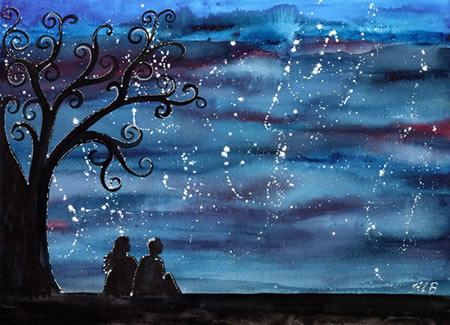
There are conversations, although few and far between, that really strike the chords of our soul. There are times when I forget that these types of conversations exist. But every so often, a person comes along that has the capacity to journey into the mysterious depths of life, awareness, the mind with you.
Sunday, October 31, 2010
Communication Skills 101
1. Eye Contact: Some believe the eyes are the gateway to the soul. Eye contact not only tells people that you are being honest, it shows them that you are listening and truly care about what they have to say. Janine Driver suggests that 60% of an average conversation should have eye contact. Anything more is weird (except in the case of love birds). Anything less shows disinterest.
2. Verbal Acknowledgement: The mmhhmm's, yes's, wow's, okay's, yeah's, ::head nods::, really?, you're kidding!, I see. You get the point. Sporadically let people know that you are not only hearing, but processing what they are saying.
3. Remembering Names, Repeating names: There is nothing better than the sound of your own name. By remembering names, you show people that they matter. Use the "name" as a tool to connect and touch people's lives. Janine Driver suggests you use the person's name at least 5 times throughout an average conversation to convey that you cherish their existence. Here's a trick I use. When you meet the new neighbor named John, imagine them dancing with the John who's been delivering your pizza for the past 3 years. Connecting something/someone new to something/someone you already know helps you process and retain new information.
4. Open, confident body: When we feel nervous or uncomfortable, we subconsciously comfort ourselves by closing our bodies, figiting, and touching ourselves. We fold our arms, cross our legs, play with our hair, pick our skin, you name it. To communicate confidence (even if you don't necessarily feel it), stand erect, don't excessively cover or fold your body, and don't fidget.
5. Paraphrasing: "Hey, John. You said you love horror films. How about we go see "Saw" this weekend?" Remembering and repeating the little things people say in your own words can go a lonnnnng way. If memorization is not your fortay, take notes. It sounds nerdy, but a little nerdiness is worth making someone feel heard and appreciated.
6. Presence: Be here now. When you are with someone, be with them. Don't engage in five other conversations on your phone, facebook, twitter, myspace, or IM. Like anything, there are probably exceptions to this. But as a rule of thumb, be present as much as possible.
7. The "Touch": No, not a grope or an extended caress. That's creepy. A simple touch. If someone says something insightful, funny, or profound, acknowledge them with a little touch on the arm or knee. As they exit, give a hug, or touch on the back to lead them out the door. Touching shows affection, care, respect, and warmth.
9. Being open, but not too open: People don't care until they know you care. People also (usually) aren't open until they know you are open. Therefore, the first step to getting another person to open up to you is by opening up to them. This does not involve a five hour narrative of your life-story. It can be as simple as, "I have a fear of heights", "I really miss my daughter, who currently lives in another state" or "I really have a passion for hiking". For more on this, read the social penetration theory. Interesting stuff.
10. Not interrupting, assuming, or putting down: Some of us (including myself) have a difficult time with this one. Point blank, allow some silence between communicative exchange to ensure the speaker's statement is complete. Don't make concrete assumptions about people based on the little information they provide you. It's natural to characterize and categorize people--but don't ever assume you know a person in his/her entirety. Finally, don't put others down. I know many people (including myself) that have a sarcastic sense of humor. Let's be real--not all people find crudeness or sarcasm funny. Get to know people a little bit before entering sarcastic territory.
11. No apologies: At any point, a crazy old lady could probably whack me in the face with a cane and I'd be the one uttering apologies. Break away from saying "sorry" as a kneejerk response. It may take practice, but it'll make you feel and appear stronger. Apologies are like a fine wine. Reserve them for important occasions.
2. Verbal Acknowledgement: The mmhhmm's, yes's, wow's, okay's, yeah's, ::head nods::, really?, you're kidding!, I see. You get the point. Sporadically let people know that you are not only hearing, but processing what they are saying.
3. Remembering Names, Repeating names: There is nothing better than the sound of your own name. By remembering names, you show people that they matter. Use the "name" as a tool to connect and touch people's lives. Janine Driver suggests you use the person's name at least 5 times throughout an average conversation to convey that you cherish their existence. Here's a trick I use. When you meet the new neighbor named John, imagine them dancing with the John who's been delivering your pizza for the past 3 years. Connecting something/someone new to something/someone you already know helps you process and retain new information.
4. Open, confident body: When we feel nervous or uncomfortable, we subconsciously comfort ourselves by closing our bodies, figiting, and touching ourselves. We fold our arms, cross our legs, play with our hair, pick our skin, you name it. To communicate confidence (even if you don't necessarily feel it), stand erect, don't excessively cover or fold your body, and don't fidget.
5. Paraphrasing: "Hey, John. You said you love horror films. How about we go see "Saw" this weekend?" Remembering and repeating the little things people say in your own words can go a lonnnnng way. If memorization is not your fortay, take notes. It sounds nerdy, but a little nerdiness is worth making someone feel heard and appreciated.
6. Presence: Be here now. When you are with someone, be with them. Don't engage in five other conversations on your phone, facebook, twitter, myspace, or IM. Like anything, there are probably exceptions to this. But as a rule of thumb, be present as much as possible.
7. The "Touch": No, not a grope or an extended caress. That's creepy. A simple touch. If someone says something insightful, funny, or profound, acknowledge them with a little touch on the arm or knee. As they exit, give a hug, or touch on the back to lead them out the door. Touching shows affection, care, respect, and warmth.
9. Being open, but not too open: People don't care until they know you care. People also (usually) aren't open until they know you are open. Therefore, the first step to getting another person to open up to you is by opening up to them. This does not involve a five hour narrative of your life-story. It can be as simple as, "I have a fear of heights", "I really miss my daughter, who currently lives in another state" or "I really have a passion for hiking". For more on this, read the social penetration theory. Interesting stuff.
10. Not interrupting, assuming, or putting down: Some of us (including myself) have a difficult time with this one. Point blank, allow some silence between communicative exchange to ensure the speaker's statement is complete. Don't make concrete assumptions about people based on the little information they provide you. It's natural to characterize and categorize people--but don't ever assume you know a person in his/her entirety. Finally, don't put others down. I know many people (including myself) that have a sarcastic sense of humor. Let's be real--not all people find crudeness or sarcasm funny. Get to know people a little bit before entering sarcastic territory.
11. No apologies: At any point, a crazy old lady could probably whack me in the face with a cane and I'd be the one uttering apologies. Break away from saying "sorry" as a kneejerk response. It may take practice, but it'll make you feel and appear stronger. Apologies are like a fine wine. Reserve them for important occasions.
Subscribe to:
Posts (Atom)